
A better future starts with Help Me Grow.
The earliest years of life shape the foundation for lifelong health, learning, and well-being. When families can easily access the supports that promote healthy development, such as health care, early learning, parenting support, and community resources, children are more likely to thrive.
Yet in many communities, the systems that serve young children are fragmented and difficult to navigate. Families often struggle to find the right help, and providers may find it difficult to connect families to the services they need.
Strengthening early childhood outcomes requires more than strong individual programs. It requires coordinated systems that make it easier for families to access support and easier for providers to connect them to services.
Help Me Grow strengthens the infrastructure that makes this possible.
What Help Me Grow Is
Help Me Grow is the nation’s only evidence-informed, replicated system model designed to connect and strengthen the many sectors that serve young children.
Help Me Grow is not a program; it is a System Model that states and communities replicate to build the infrastructure that ensures developmental promotion for all children, early identification of concerns, and seamless referral, linkage, and connection to the supports families want and need.
By aligning partners across sectors and strengthening how systems work together, Help Me Grow helps communities ensure families can access support earlier and more easily.
The Goal of Help Me Grow
The goal of Help Me Grow is simple but powerful:
All families with young children have timely and equitable access to the resources and services they want and need to support their children’s development, health, and well-being.
Achieving this goal requires more than strong programs. It requires systems that are coordinated, accessible, and designed to support families effectively.
Think of the network of services for young children as a power grid. Across communities, many programs and services are working hard to support families. But without coordination, the system can feel fragmented and difficult to navigate. Help Me Grow helps ensure that this network functions as a connected system, so families can plug in and access the support they need, when they need it. By aligning partners around shared goals and coordinated pathways, communities can strengthen existing resources, reduce fragmentation, and ensure children receive the right support at the right time.
Building a Connected System of Support
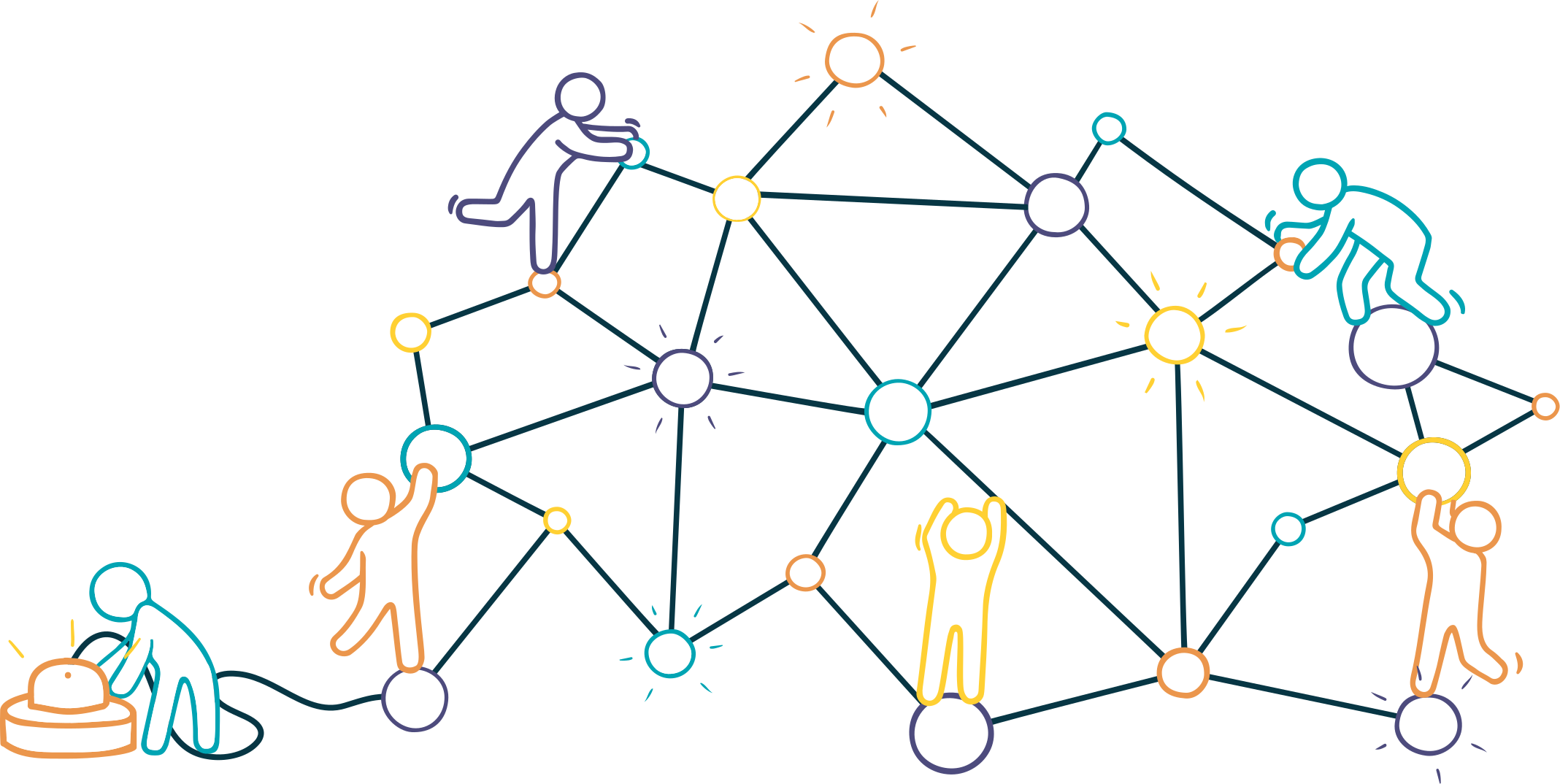
Help Me Grow is a system model that ensures early childhood services work together as a coordinated whole, so families can find and connect to support more easily. The Model operates through a set of Core Components and Structural Requirements that function together: Together, these elements ensure that: The result is a connected early childhood system where services work together, resources are used more effectively, and families experience timely, coordinated support.
How the Model Works
The Help Me Grow Model includes four Core Components, which describe the essential functions a community must ensure is in place so families experience a coordinated system of support. Together, they provide the structural outline for how universal access, early identification, linkage, and system improvement function reliably and equitably. Coordinated Access Child Health Care Provider Outreach Family and Community Outreach Data Collection & Analysis
Core Components
A centralized access point—often a call center, help line, or digital platform—where families and professionals can turn for guidance, developmental screening, referrals, and follow-up. This coordinated entry point helps ensure families receive personalized support navigating available services and resources.
Strong partnerships with pediatric and primary care providers help promote healthy development, identify concerns early, and connect families to community-based supports. Through these partnerships, health care providers have trusted referral pathways and families receive support beyond the clinical setting.
Intentional engagement with families, caregivers, and community organizations increases awareness of child development and available supports. These efforts strengthen trusted relationships across the community and ensure families know where to turn when they have questions or concerns.
Data is used to understand how the system is working for families and where it needs to improve. By bringing together information on referrals, connections, and family experiences, communities can identify gaps, remove barriers, and strengthen pathways across sectors. These insights drive continuous system improvement, helping partners work more effectively together so families are not just referred, but successfully connected to the supports they want and need.
Structural Requirements
The HMG Model’s three Structural Requirements describe the enabling conditions that allow HMG systems to sustain, strengthen, and scale the work of the Core Components. In contrast to the essential functions defined by the Core Components, the Structural Requirements focus on how those functions are implemented, improved, and sustained over time. They provide the governance, continuous improvement, expansion, and sustainability strategies that keep those functions effective, coordinated, impactful, and scalable over time.
Organizing Entity
Each HMG system is supported by a designated organizing entity responsible for coordinating partners, aligning efforts across sectors, and guiding implementation of the Model. The organizing entity helps ensure the system operates under shared, cross-sector leadership, clear accountability, and strong collaboration across health care, early childhood, family support, and community partners.
Continuous System Improvement
HMG systems use data to understand how the early childhood system is functioning, identify gaps or inequities in access, and guide continuous system improvement over time. Partners regularly review data and work together to strengthen referral pathways, improve coordination, and ensure families are successfully connected to the supports they need.
Spread & Scale
HMG systems are designed to expand over time so more communities and families can benefit from coordinated early childhood support. Through intentional planning and shared learning, communities can spread the Model to new regions, strengthen implementation where it already exists, and deepen integration across sectors—while maintaining fidelity to the Model.
The Results
When the Help Me Grow Model is implemented with fidelity, communities build stronger early childhood systems where:
- Families can find support more easily and access services earlier.
- Providers have reliable referral pathways and stronger cross-sector partnerships.
- Services and supports are coordinated across health care, early learning, and family support systems.
- Leaders and partners use shared data to guide continuous system improvement.
- Communities expand coordinated systems of support so more families can benefit over time.
- Public investments generate stronger outcomes for children, families, and communities.
Across the Help Me Grow National Affiliate Network, these system-level improvements translate into measurable impact:
- More than 1.1 million individuals reached through outreach annually.
- Approximately 73% successful linkage rate, ensuring families connect to the services they are referred to.
- 87% of families report that Help Me Grow met their needs.
All Help Me Grow systems that have calculated return on investment have demonstrated positive total savings across multiple sectors, including special education, public assistance (e.g., SNAP, WIC, TANF), child welfare, early intervention, Medicaid, commercial health insurance, and criminal justice. Most systems report a positive ROI between $3 and $5, with some demonstrating as much as $29 in long-term savings for every $1 invested.
Through this coordinated approach, communities can ensure that all families with young children have timely and equitable access to the resources and services they want and need to support their children’s development, health, and well-being.