The greatest catalyst for children’s healthy
development is all of us.
Help Me Grow brings together leaders, families, and communities to create strong early childhood systems where every child can thrive. Guided by two complementary theories of change, we combine vision with action to move from ideas to impact.
Working alongside our National Affiliate Network, we identify solutions, raise awareness, foster partnerships, and elevate early childhood to a national conversation. Together, we are building a movement that ensures families have the resources and connections they need, when they need them.
The Help Me Grow National Center nurtures the relationships, dialogue, and innovation that build broad-based support for strong, connected communities. Planning together strengthens systems. Thinking together magnifies impact. Working together helps every child reach their full potential.

Strong early childhood systems—across health care, education, and family services—are the foundation for thriving children and families. Help Me Grow strengthens these systems by integrating services, reducing fragmentation, and ensuring families can access support without barriers.
Our success depends on a shared vision and consistent ways of measuring progress. With leaders across sectors at the table, we establish common goals, align values, and drive a unified agenda that promotes the healthy development of every child.
Help Me Grow is more than a model—it is a movement powered by collaboration, shared purpose, and the belief that all children deserve the chance to reach their full potential.
Our Theories of Change
To achieve our vision that all children should be able to grow, develop, and thrive to reach their full potential, two unique theories of change guide our work
Our theories of change explain how Help Me Grow HMG turns everyday actions into better outcomes for young children. It operates on two, mutually reinforcing levels: Local Implementation and the National Network. Each level follows a simple logic: If we do the work, then systems function better—so that children get timely developmental promotion, early detection, and linkage to the right services.
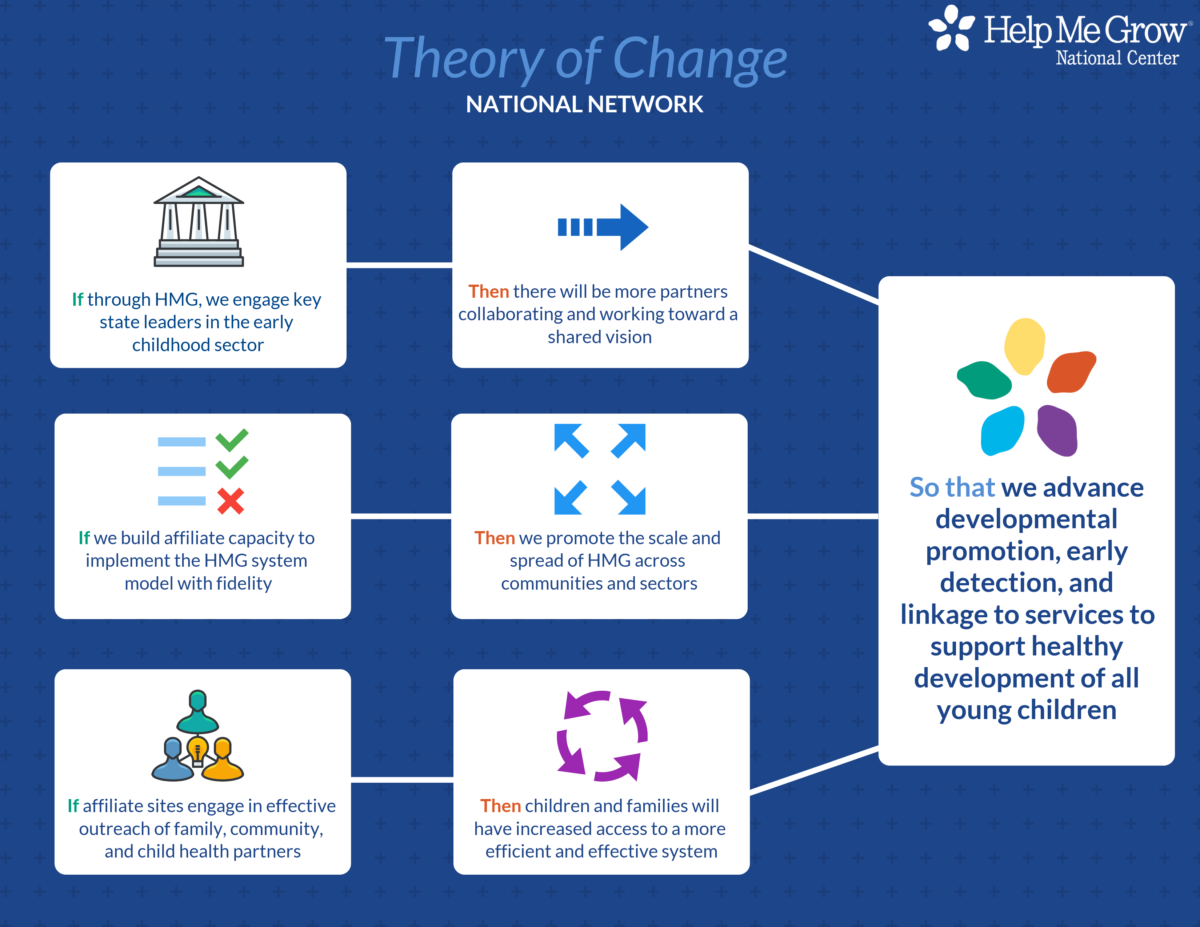
National Theory of Change
If we strengthen the conditions for system change at scale, then communities can implement with fidelity and spread what works—so that more children benefit nationwide.
- If we engage key state leaders across the early childhood sector, then more partners collaborate around a shared vision for coordinated systems.
- If we build affiliate capacity to implement the HMG Model with fidelity, then we promote the scale and spread of HMG across communities and sectors.
- If affiliates conduct effective outreach with family, community, and child health partners, then children and families gain increased access to a more efficient, effective system.
So that: we advance developmental promotion, early detection, and linkage to services to support the healthy development of all young children.
Local Theory of Change
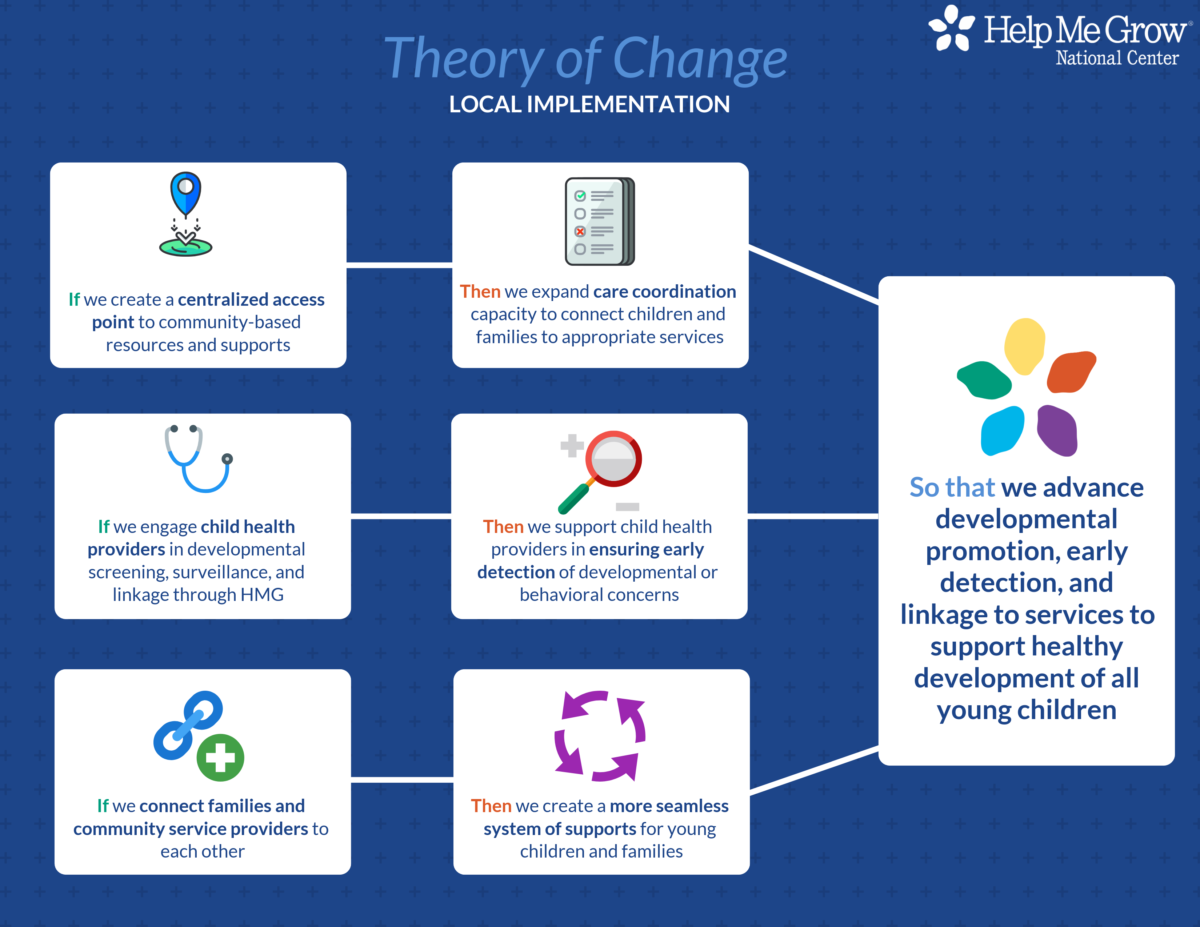
If a community builds the right connections, then families experience a seamless path to support—so that every child can grow and thrive.
- If we create a centralized access point to community-based resources, then we expand care coordination capacity to connect children and families to the right services at the right time.
- If we engage child health providers in developmental screening, surveillance, and linkage through HMG, then providers can ensure early detection of developmental or behavioral concerns and prompt referral.
- If we connect families and community providers to each other, then we create a more seamless system of supports for young children and their caregivers.
So that: we advance developmental promotion, early detection, and linkage to services to support the healthy development of all young children.
How the two levels work together
- The National Network creates the enabling environment—leadership alignment, capacity, and spread.
- Local Implementation delivers the on-the-ground experience—centralized access, provider engagement, and family-to-service connections.
Together, they power a coordinated, equitable early childhood system that helps families get what they need, when they need it.